
09.09.2026
U.S. Soy Staff Writer
Wessel farms about 2,000 acres and runs 75 head of Angus cattle with his father and son. The farm went 100% no-till in 1985, driven by highly erodible ground and a landlord who wanted to keep the soil in place.
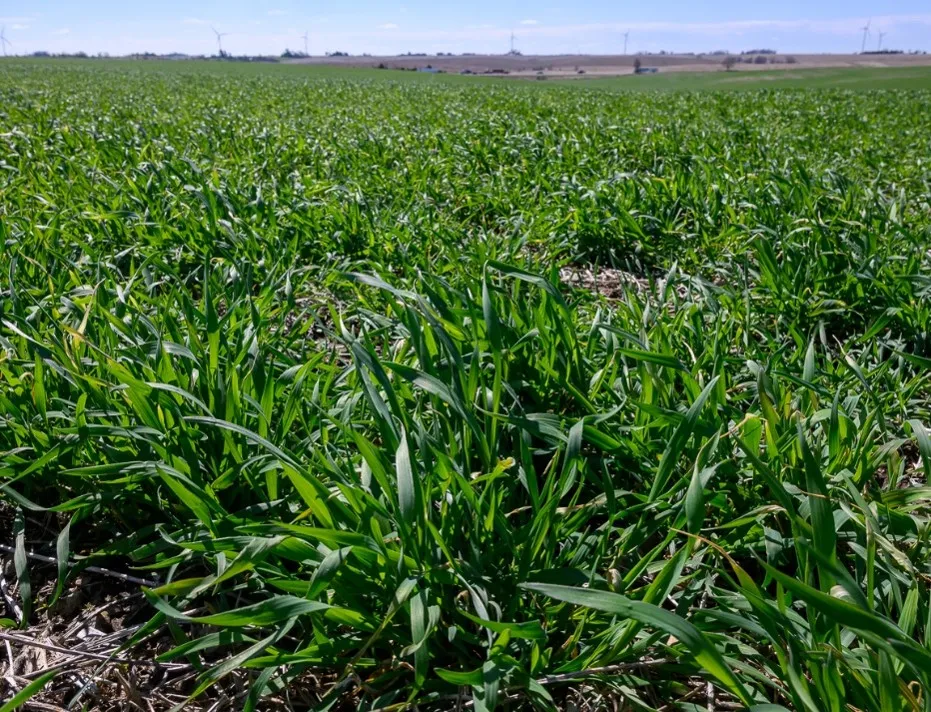
The cover crops came from the cattle side: cereal rye and wheat planted as winter forage. A feed decision became a soil-management decision, and today at least 95% of Wessel’s acres carry a cover crop.
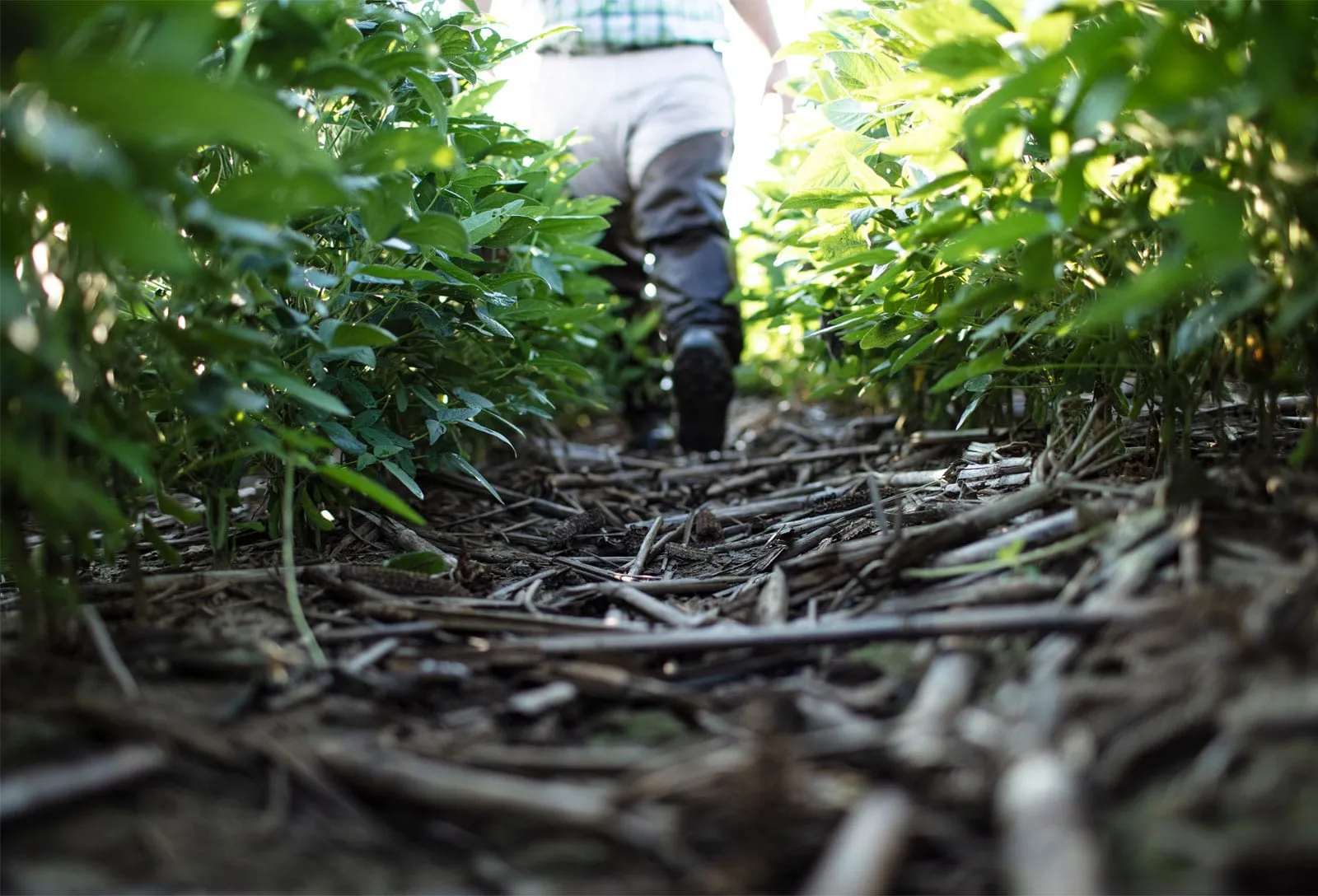
“The aggregates and everything in the soil, it just changes the structure of the soil,” Wessel says. Four inches of rain fell on his farm over about two days this summer. Very little water stood in the fields.
“That water infiltration just sucks it up like a sponge.”
The research behind the practice
Sustainability research supported by the Soy Checkoff centers on the same practices Wessel has layered onto his farm over four decades: cover crops, reduced tillage and precision nutrient management.
Rick Lambeth, a farmer and program director of sustainable production for United Soybean Board (USB), helps oversee that research portfolio. Some of the strongest emissions data in soybeans comes from work at Iowa State University supported in part by the Soy Checkoff.
A 2024 study in Nature Sustainability, modeling 15 Midwestern sites, found that about 40% of nitrous oxide emissions in a corn-soybean rotation occurred during the soybean phase. The study also modeled cereal rye combined with early-planted soybeans and found the potential to reduce soybean-phase emissions by 33% per bushel. ¹
What stays in the field
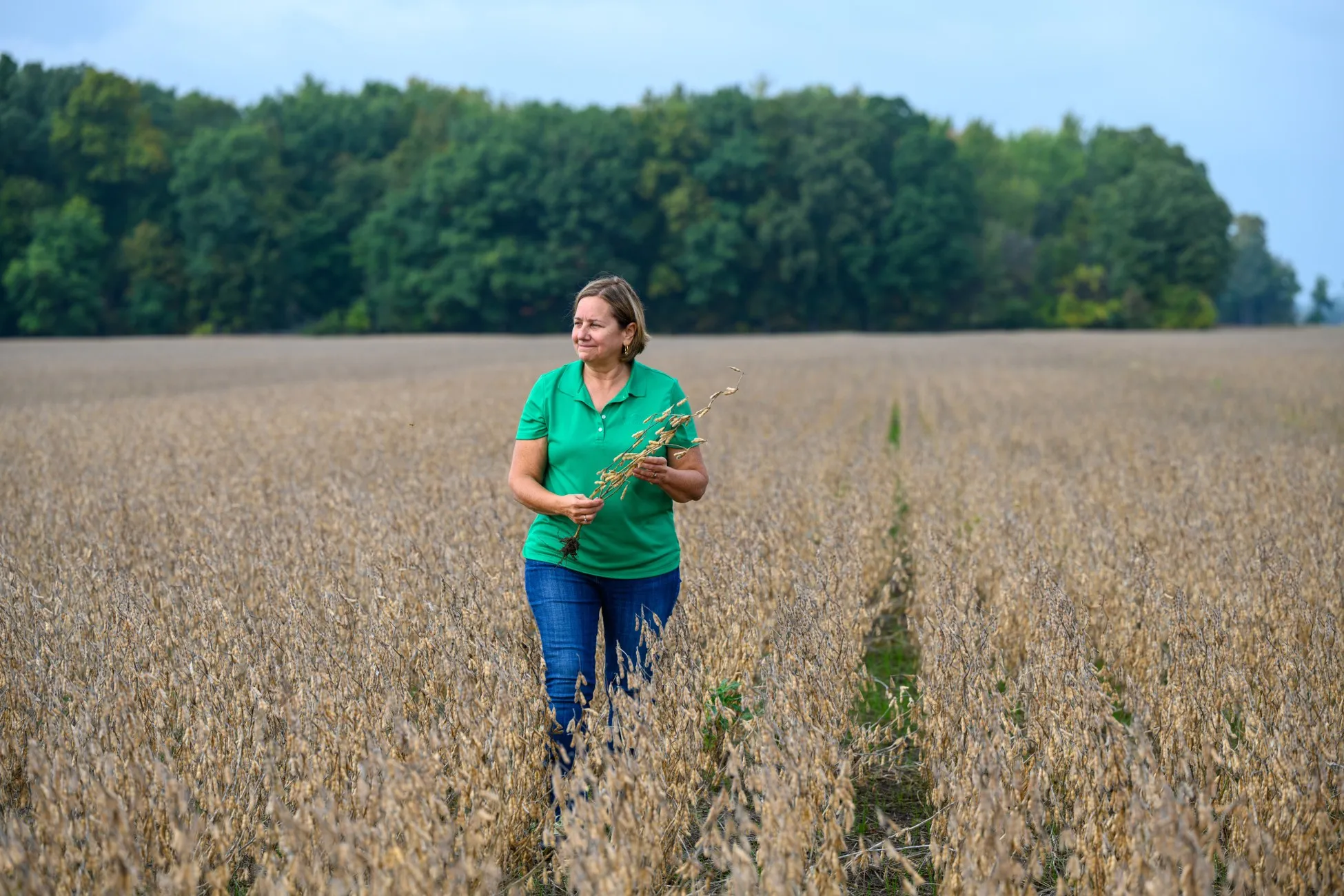
USB director Laurie Isley farms about 1,100 acres in southeastern Michigan with her husband and son. The family is the fifth generation on ground that dates back about 150 years.
Cover crops went in first, in 2012. Strip-tillage followed a year later. Strip-tillage disturbs a roughly six-inch band while leaving the rest of the soil undisturbed. The Isleys plant corn into those strips, then no-till soybeans between the same rows the following year.
“A lot of it is simply disturbing that soil as little as possible, so it maintains the structure,” Isley says.
That structure helps the soil hold and move water. The farm has no irrigation, so whatever rain falls must stay available to the crop.
Where the programs fit
Companies and organizations are increasingly paying farmers to adopt, document or maintain practices that support supply-chain environmental goals. Cargill RegenConnect, ADM and PepsiCo all run programs, and Farmers for Soil Health has paid $35 an acre for cover crops.
“That’s about enough, on average, to cover the cost of the cover crop seed and the operation to plant it,” Lambeth says.
Feeding the field
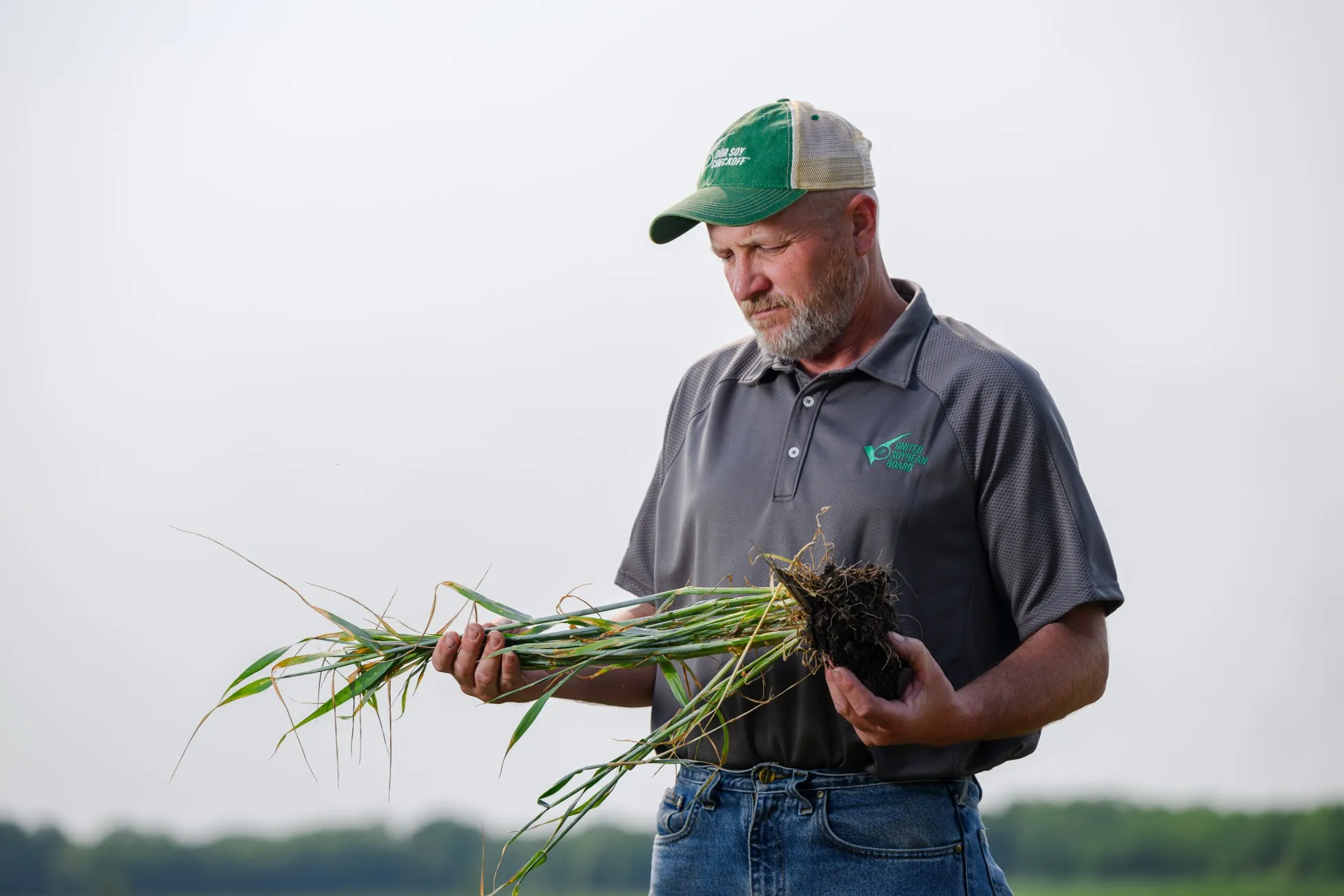
Precision nutrient management is the third major practice in Soy Checkoff’s research portfolio and, on Wessel’s farm, the oldest of the three.
He has soil-test records dating back to the 1980s. For the past eight to 10 years, he has used variable-rate applications for phosphorus, potassium and nitrogen, developing prescriptions from his own soil and yield maps. Wessel runs eight center pivots, and every circle leaves dry land corners the water doesn’t reach.
“You just cut back on the nutrients there, because you know you’re not going to get the same yield off of it,” he says.
The misconception that stops farmers
From his perspective working with farmers and research, Lambeth says one of the biggest misconceptions about conservation practices is their effect on yield.
Some practices can create a yield drag during the transition period, he says. But that effect can lessen as soil structure, water management and nutrient cycling improve. The bigger challenge is timing.
“The expenses are immediate, and the benefits are delayed,” Lambeth says. Isley says that sometimes, the return doesn’t show up in the yield column. “What we see as an improvement by using these tools is not necessarily greater yield, but sometimes it’s greater profitability, because it’s more carefully managed nutrients,” she says. “It’s more carefully managed tillage, and it’s just fewer trips, so it’s less fuel, less labor.”
What works on her sandy loam may not work the same way elsewhere. Season length, for example, can determine whether a cover crop has enough time to establish. But adoption can spread when farmers see the difference. After heavy rain, Isley says, other farmers have asked why water doesn’t stand on their fields. The answer is soil structure, built by cover crops and reduced tillage.
“You really need to be able to show them that difference,” Isley says.
The long view
For Wessel, the value of cover crops extends beyond any sustainability payment. They also extend their cattle’s grazing season by about a month at either end of winter. The rest shows up over time.
His son came back to the farm two years ago. His grandson is 14 and already knows what he wants to do.
“Sometimes there’s four generations out there working,” Wessel says. “That’s why we do it, to pass it on to the next generation.”
¹ Della Chiesa, T., et al. “Reducing greenhouse gas emissions from North American soybean production.” Nature Sustainability 7 (2024): 1608–1615. Funded in part by the United Soybean Board.
U.S. Soy Staff Writer
U.S. Soy provides a sustainable alternate protein, that allows our farmers to grow their businesses and feeds countless families around the world.