


02.09.2026
U.S. Soy Staff Writer
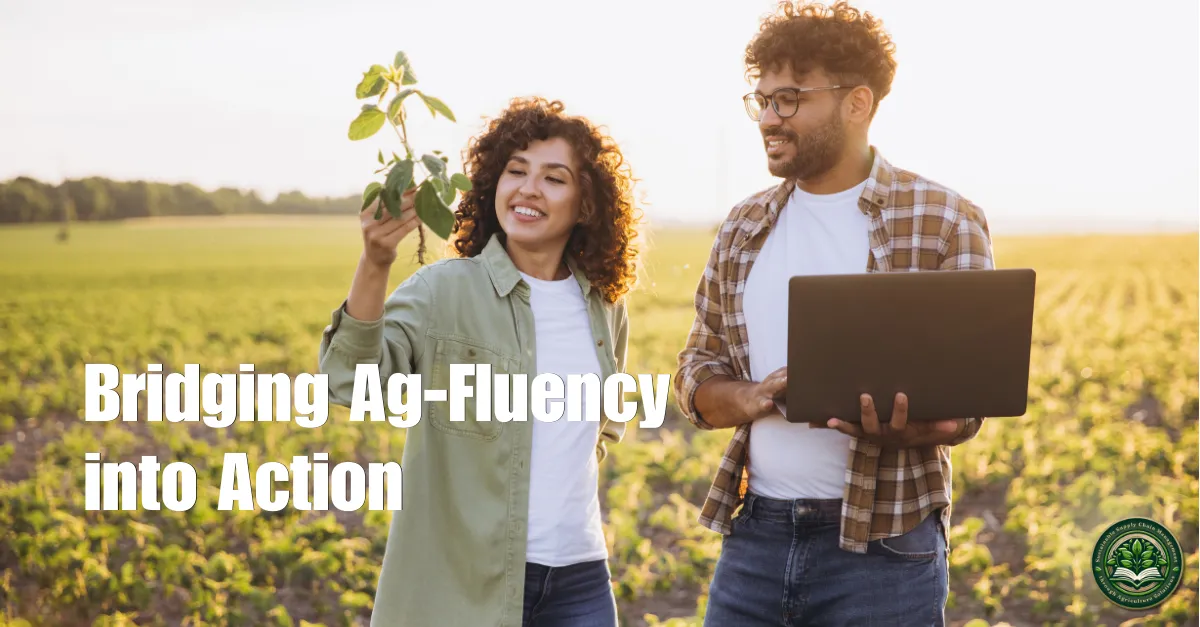
U.S. Soy and Arizona State University offer flexible learning for busy professionals.
Most sustainability professionals are fluent in reporting frameworks, supplier scorecards, and emissions targets. But agriculture, often a significant part of a company’s Scope 3 footprint (the indirect emissions embedded across its value chain), often remains unfamiliar territory.
What reduces emissions on a farm? How do soil health, crop rotation, and input decisions influence sustainability outcomes? And how should that knowledge shape sourcing strategies? For many sustainability professionals, business school never addressed these questions. Environmental, social, and governance (ESG) frameworks focus on disclosure, not what happens between planting and harvest.
That disconnect between sustainability strategy and agricultural reality is where even well-intentioned sourcing decisions can fall short—introducing risk into sustainability claims and limiting measurable progress.
To help bridge that gap, U.S. Soy and Arizona State University’s W. P. Carey School of Business created Sustainable Supply Chain Management through Agriculture Solutions. The course equips sustainability professionals with practical agricultural insight to strengthen sourcing decisions, evaluate supplier practices, and support credible Scope 3 strategies.

Five modules, five outcome-driven perspectives
In eight self-paced hours, participants complete five modules led by subject-matter experts. Each module delivers practical insight that can be applied immediately to sourcing, procurement, and sustainability strategy.
1. Greenhouse Gas Emissions Solutions
Learn where greenhouse gas emissions originate across the agri-food value chain and which mitigation strategies deliver meaningful reductions. Sustainability and global ESG strategist Chris Lambe examines primary emission sources and practical approaches that support measurable progress across the full product life cycle.
2. Ecosystem Services Solutions
Develop the ability to evaluate agricultural impacts beyond caron. Dr. Marty Matlock, University of Arkansas professor and global leader in sustainable agriculture, introduces tools such as global and regional water indices to assess both environmental impacts and agriculture’s contributions to broader ecosystems.
3. Biobased Materials Solutions
Understand how soybeans deliver value beyond a single commodity. Dr. Rachel Owen, a consultant specializing in sustainable agriculture and science policy, explores how soy processing supports biobased alternatives by maximizing value, minimizing waste, and producing complementary food and fuel products.
4. Sustainable Farming Practices and Solutions
Gain insight into how sustainability plays out at the field level. Farm operator and agricultural marketing consultant Andrea Brossard brings a farmer’s perspective, walking participants through daily practices that improve efficiency, resilience, and environmental outcomes—demonstrating how productivity and stewardship work together.
5. Supply Chain Solutions
Connect on-farm practices to real-world purchasing decisions. Dr. Kevin Dooley, Distinguished Professor of Supply Chain Management at Arizona State University and Chief Scientist at The Sustainability Consortium, traces sustainable soy from farm to end user, highlighting who is buying sustainable soy and the standards they prioritize.
Talk directly with farmers and experts
The program includes Behind the Supply Chain Sync Sessions: live, one-hour Zoom discussions where sustainability professionals can engage directly with instructors and farmers. These sessions provide participants with the opportunity to ask questions, test ideas, and apply concepts to their own supply chain challenges.
Meagan Kaiser, soybean and corn farmer, soil scientist, and former Chair of the United Soybean Board, brings a farmer perspective throughout, grounding academic concepts in field-level reality.
The next step
Meeting sustainability demands requires knowing the right questions to ask, how to evaluate supplier practices, and what credible sustainable sourcing looks like in practice. For professionals ready to strengthen sourcing decisions and improve Scope 3 outcomes, Sustainable Supply Chain Management through Agriculture Solutions, is the place to start.
The course combines Arizona State University’s W. P. Carey School of Business leadership in sustainability education with U.S. Soy’s decades of agricultural expertise. Learn more and register at sustainableagsupplychain.com.
U.S. Soy Staff Writer
U.S. Soy provides a sustainable alternate protein, that allows our farmers to grow their businesses and feeds countless families around the world.