06.18.2026
U.S. Soy Staff Writer
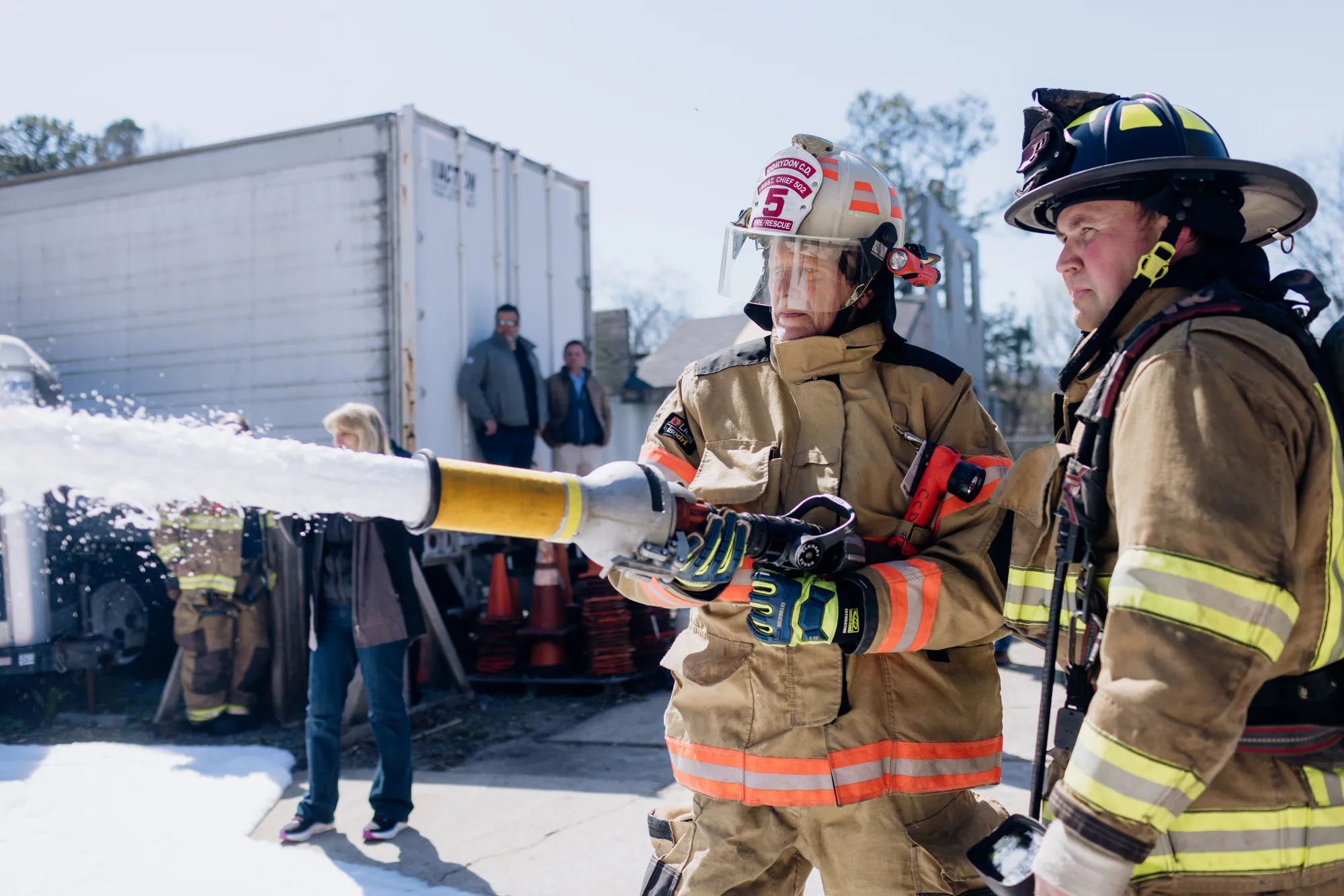
“SoyFoam™ TF 1122 is exactly the kind of project the Soy Checkoff exists to support,” said U.S. soybean farmer Barry Alexander, a farmer-leader on the United Soybean Board (USB).
Developed by Cross Plains Solutions with USB funding, the soy-based firefighting foam is designed to extinguish both Class A and Class B fires without per- and polyfluoroalkyl substances (PFAS), the “forever chemicals” raising health and environmental concerns due to their persistence in the environment and the human body.
On Oct. 3, 2024, the product was awarded GreenScreen Certified Gold™ status, the first firefighting foam ever to reach that level.¹ That certification recognizes products that contain no intentionally added PFAS and avoid a long list of chemicals of high concern, thus meeting rigorous safety and environmental standards.
SoyFoam also earned the 2025 Green Chemistry Challenge Award in the category of Design of Safer and Degradable Chemicals, a national recognition sponsored by the American Chemical Society.
The PFAS challenge
The use of soy in firefighting goes back to World War 2, when chemist Dr. Percy Lavon Julian developed soy-based firefighting concentrates the U.S. Navy used successfully against shipboard fuel fires. Over time, firefighting technology shifted toward fluorinated chemistry such as aqueous film-forming foam (AFFF), and the soy-based approach largely faded from use.
SoyFoam revisited that earlier chemistry in a modern formulation designed to address today’s growing concerns around PFAS persistence.
“As a chemist, I would say PFAS are almost perfect designer molecules,” said Mark Bahar, a Program Director in the Industrial Uses Team at USB. “They were built to be highly stable and low-reactivity, and they do exactly that: resist heat, oil, water, stains, and chemical breakdown.”
However, that stability is exactly the problem. The carbon-fluorine bond is among the strongest in organic chemistry, and most PFAS do not readily biodegrade – microorganisms cannot break down the fluorinated carbon backbones at meaningful rates and some of these compounds can persist in nature for years or decades. Some of these unusually versatile properties of PFAS allowed them to be exceptionally effective at suppressing fuel fires, and over time they became a benchmark in firefighting foam formulations.
Firefighters face some of the highest exposure levels to PFAS through decades of AFFF use. According to the Environmental Protection Agency, research suggests that long-term PFAS exposure may be associated with adverse health effects, including increased risk of some cancers. ²
Those concerns come on top of the profession’s already elevated health risks: a landmark National Institute for Occupational Safety and Health study of nearly 30,000 career firefighters found higher rates of both cancer diagnoses and cancer-related deaths compared to the general U.S. population.³
That mounting evidence is driving regulation at both the federal and state levels, though the landscape remains fragmented: Federal and state restrictions on PFAS-containing firefighting foams continue to evolve, with timelines and requirements varying by case and jurisdiction. As regulations tighten and departments look for alternatives, SoyFoam use is beginning to expand across the country.
Where SoyFoam is showing up
SoyFoam has been adopted by fire departments in multiple states, including Georgia, Missouri, Kentucky, Virginia, and Wisconsin, according to Cross Plains and SoyBiobased case studies.⁴ Cross Plains is pursuing additional qualification pathways, including the UL 162 certification and the military fluorine-free foam specification used for certain Department of Defense land-based applications.
Small rural volunteer crews were among SoyFoam’s earliest adopters. “Many soybean farmers are also volunteer firefighters,” said Bahar. “They know exactly what’s at stake.”
For Alexander, that connection between farming and firefighting comes back to stewardship.
“We’re trying to be the best stewards of the land and also the best stewards of the environment and the people,” said Alexander. “We’re producing food one way or the other, but if we can help protect and make the environment better, and help protect consumers across the board, it’s a good story to have.”
¹ “GreenScreen Certified® Firefighting Foam.” Clean Production Action. https://www.greenscreenchemicals.org/certified/products/category/firefighting
² U.S. Environmental Protection Agency. "Our Current Understanding of the Human Health and Environmental Risks of PFAS." EPA.gov, last updated April 21, 2026. https://www.epa.gov/pfas/our-current-understanding-human-health-and-environmental-risks-pfas
³ Daniels, R.D. (2017). “Firefighter Cancer Rates: The Facts from NIOSH Research.” National Institute for Occupational Safety and Health, Centers for Disease Control and Prevention.
⁴ SoyBiobased.org. "Kentucky Civil Defense Fire & Rescue Protects with Soy-biobased Bar & Chain Biodegradable Oil & Firefighting Foam." United Soybean Board, March 2025. https://www.soybiobased.org/success-stories/kentucky-civil-defense-uses-soy/

U.S. Soy Staff Writer
U.S. Soy provides a sustainable alternate protein, that allows our farmers to grow their businesses and feeds countless families around the world.