

08.14.2026
U.S. Soy Staff Writer

"Every hog I sell is worth more because of exports," says United Soybean Board (USB) Director Jim Douglas. "Right now, I'm getting about $68 more per hog."
For Douglas, a soybean farmer and pork producer in Flat Rock, Ind., that premium is proof that export markets do more than move meat overseas. They create demand for soybean meal right here at home, adding value to every bushel of soybeans fed to livestock.
"When we think about exports, we tend to think about soybeans," Douglas says. "But exports also drive demand for soybean meal through meat production. It's just that simple."
Douglas says the connection between soybeans and meat exports has grown significantly during his farming career. As economies around the world have expanded, more consumers can afford meat, creating new opportunities for U.S. agriculture.
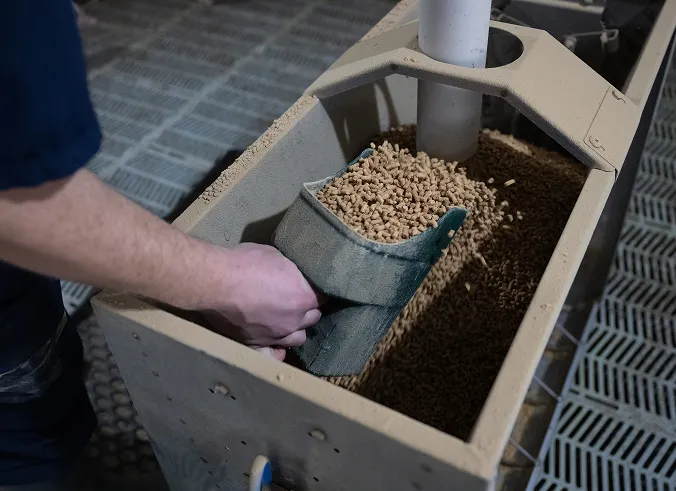
When international demand for pork grows, livestock producers feed more soybean meal. That means stronger domestic demand for U.S. soybeans, even when the soybeans themselves never leave the country.
Douglas says another often-overlooked benefit of exports is the value of pork cuts that aren't as popular with American consumers.
"Market access work keeps the market moving on variety meats," he says.
Different countries prefer different cuts of pork. While Americans tend to favor loins and chops, customers in overseas markets often pay premium prices for products that have less value in the United States. Selling more of every animal increases the value of every hog produced.
"It takes the same amount of soybean meal to produce one pound of red meat no matter which cut is preferred," Douglas says. "We get more money per hog when we factor in variety meats."
Helping create those opportunities is where soybean checkoff investments make a difference.
Through support of the U.S. Soybean Export Council (USSEC) and the U.S. Meat Export Federation (USMEF), the Soy CheckoffSM helps build customer confidence, open markets, and address non-tariff trade barriers that allow U.S. pork and soybean products to compete around the world.
"When international customers buy more U.S. pork, they're also buying demand for soybean meal," says USB Director and USSEC Second Vice Chair Reggie Strickland. "USSEC's animal protein marketing programs are a direct investment in U.S. soybean farmer income."
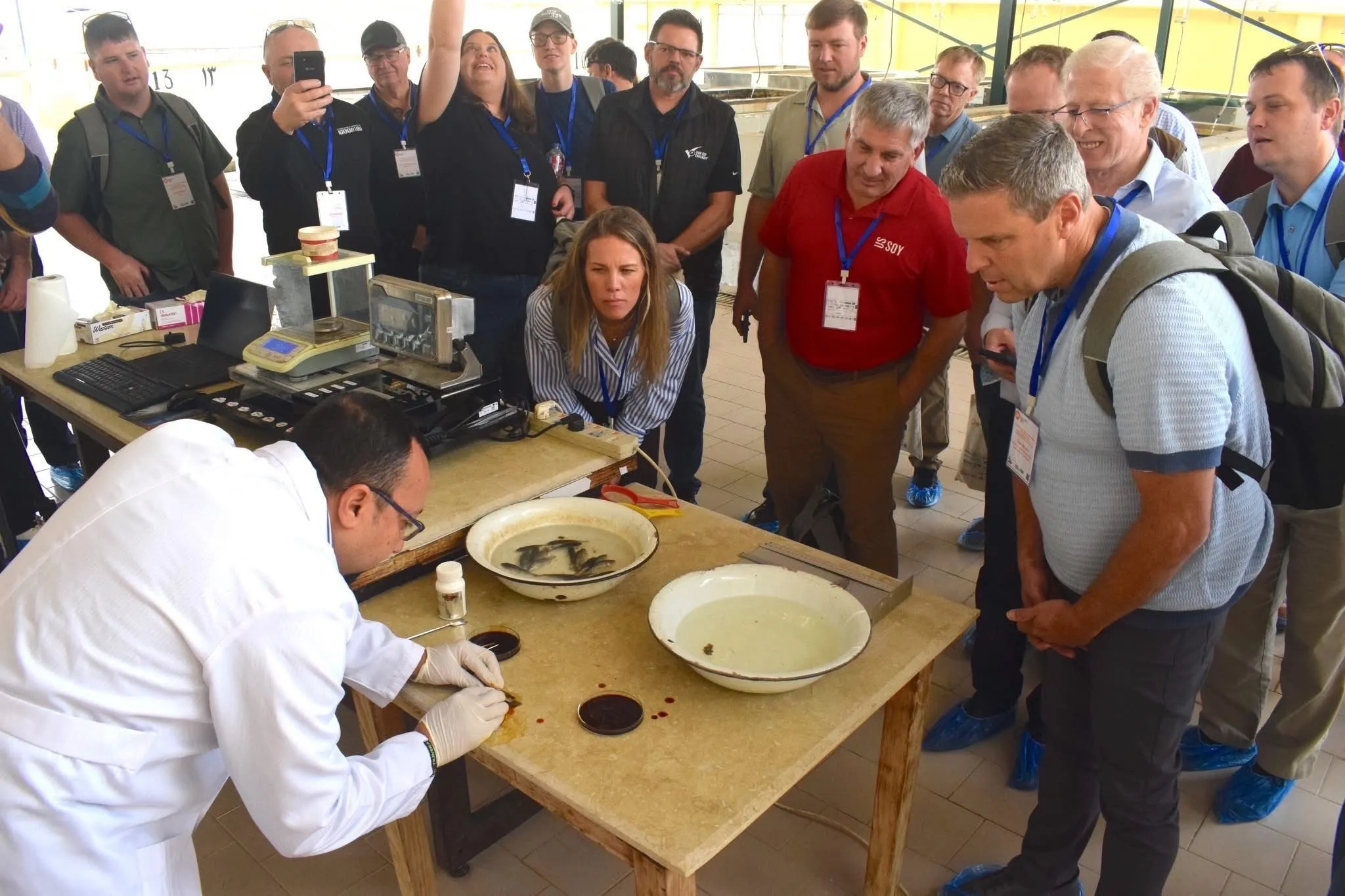
With staff in more than 80 countries, USSEC helps customers understand the quality, consistency, and sustainability of U.S. SoySM.
"Our customers really want U.S. products—from soybeans to meal to meat—because they understand the quality," Strickland says. "Everyone looks to USSEC for good information. Our buyers see them as trustworthy with an unbelievable reputation."
Those relationships help create opportunities that benefit soybean farmers long after the initial sale.
According to John Hinners, senior vice president of industry relations at USMEF, every exported pork loin represents about 7¼ pounds of soybean meal, while every ham exported to Mexico represents roughly 17 pounds. Across millions of exported pork products, those numbers add up to significant soybean meal demand.
"It's a real value-add for the soybean and pork industries when we can send pork cuts to countries willing to pay more," Hinners says. "International markets complement the domestic market—whether that's sending soybeans directly or through meat products."
This year marks USMEF's 50th anniversary. Today, the organization helps promote U.S. red meat in more than 80 countries, creating additional demand for pork produced with U.S. soybean meal.
“The U.S. soybean industry provides critical support for USMEF’s efforts to expand global demand for U.S. pork,” Hinners states.
The return on that investment is measurable. About 30% of U.S. pork and pork variety meats are exported, and that trade accounted for more than 100 million bushels worth of U.S. soybean demand in 2025, according to an independent study by the Juday group. For Douglas, those numbers reinforce why export market development matters.
"If we lost these export markets, the whole industry would shrink," he says. "There would be a glut of soybeans and corn."
U.S. Soy Staff Writer
U.S. Soy provides a sustainable alternate protein, that allows our farmers to grow their businesses and feeds countless families around the world.

.webp)