


04.21.2026
U.S. Soy Staff Writer
.webp)
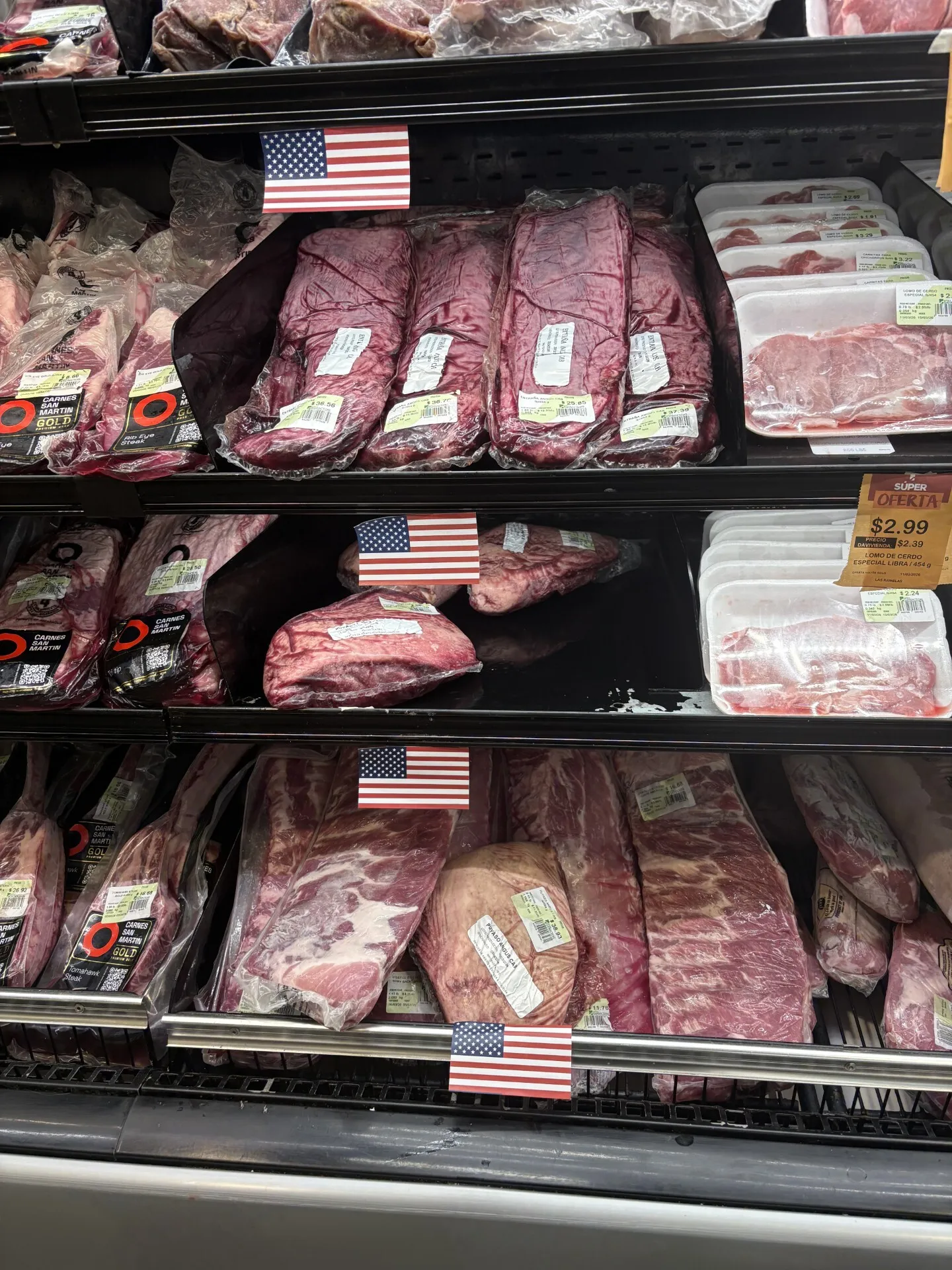
The grocery store was just one stop during a recent USDA trade mission to Guatemala and El Salvador, led by Under Secretary for Trade and Foreign Agricultural Affairs Luke J. Lindberg. Pulskamp, a North Dakota farmer and United Soybean Board director, was participating in her role as a member of the U.S. Soybean Export Council (USSEC).
“The store manager said those are very sought-after items when the flags are displayed,” Pulskamp said. “There was a little bit of pride, honor, and honestly, some emotion in seeing that other countries want your products like that.”
When store employees approached her to express their gratitude, the moment stood out.
“Most of the time, I’m more focused on whether I can get my crop in, manage the weather, or keep up with commodity prices,” she said. “And then someone who is working to improve their own situation day by day thanks you, because what we do here affects their life there. That’s humbling.”
“As one of the only farmers representing soybeans, it was an honor to be part of this group and meet people with a long-standing relationship with U.S. Soy,” she said. “Being there gave me an opportunity to continue building on those relationships.”
Markets built on U.S. Soy
These relationships are backed by strong demand. During the 2024-2025 marketing year, Guatemala and El Salvador ranked among the leading global importers of soybean meal, importing approximately 700,000 and 250,000–270,000 metric tons, respectively, with the vast majority—typically over 95 percent—sourced from the United States.¹ ²
For North Dakota soybean farmers, that consistency matters. Reliable export demand helps support prices, diversify markets, and create long-term growth opportunities.
The delegation met with government officials and industry leaders in both countries to discuss trade and market access. In Guatemala, the group connected with leaders in the food production sector who emphasized how the quality of U.S. ingredients translates directly into the products they sell. In El Salvador, conversations focused on improving trade efficiency. Efforts to modernize ports have reduced unloading times from weeks to just a few days, helping maintain product quality and reliability for end users.
Strengthening relationships
When a country sources a majority of its soy from the United States, that didn’t happen by chance.
“It happened by building those relationships and continuing to strengthen them,” said Pulskamp. Those relationships take on added significance given the region’s economic realities and growing population. Demand for safe, high-quality food continues to rise, and U.S. Soy is well positioned to meet that need.
“Even though their financial situations may not be as strong as ours, they still choose to invest in a better product because they know it’s coming from the United States,” she said. “That choice carries real weight when resources are more limited.”
A Rising Tide
For North Dakota farmers, Central America may feel like a distant market. Today, most soybeans shipped to the region move through Gulf export channels, while Northern Plains soybeans often head to the Pacific Northwest.
Still, Pulskamp sees long-term opportunity.
“We never know where a relationship will build and grow,” she said. “If those ports expand and can accommodate larger vessels, it may open up future markets.”
More broadly, she views international engagement as a shared responsibility.
“When I go to represent U.S. Soy, I go to represent all of us,” she said. “It doesn’t matter where my product specifically goes. What matters is that we represent soy well.”
She encourages other farmers to take part if given the chance.
“U.S. farmers are highly respected around the world,” she said. “That’s something worth seeing firsthand.”
¹ U.S. Department of Agriculture, Foreign Agricultural Service. (2025). Production, supply and distribution (PSD) database: Soybean meal imports. https://apps.fas.usda.gov/psdonline
² U.S. Department of Agriculture, Foreign Agricultural Service. (2025). Soybean meal export markets. https://www.fas.usda.gov/data/commodities/soybean-meal
U.S. Soy Staff Writer
U.S. Soy provides a sustainable alternate protein, that allows our farmers to grow their businesses and feeds countless families around the world.