
04.06.2026
U.S. Soy Staff Writer
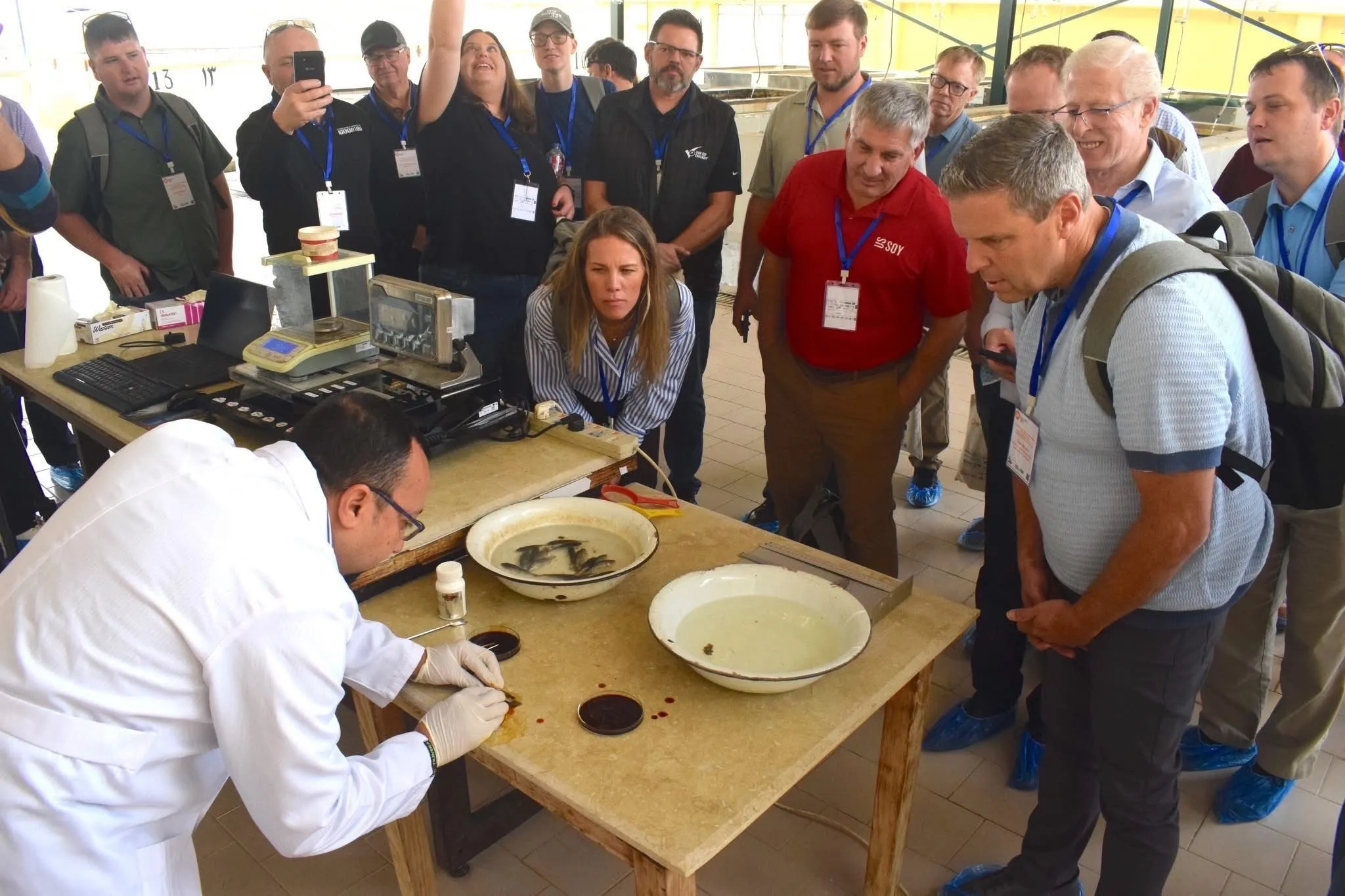
“We left home, our families, and our farms to travel to the middle of a dry, sandy, remote desert to study aquaculture,” says Arkansas farmer and United Soybean Board (USB) Director Robert Petter.
Petter recently participated in USB’s See for Yourself trade mission to Egypt, a program that allows farmers to see firsthand how checkoff investments are helping build international demand for U.S. Soy.
What he found surprised him.
“Egypt is the place to be,” Petter says. “It’s a huge success story for U.S. Soy.”
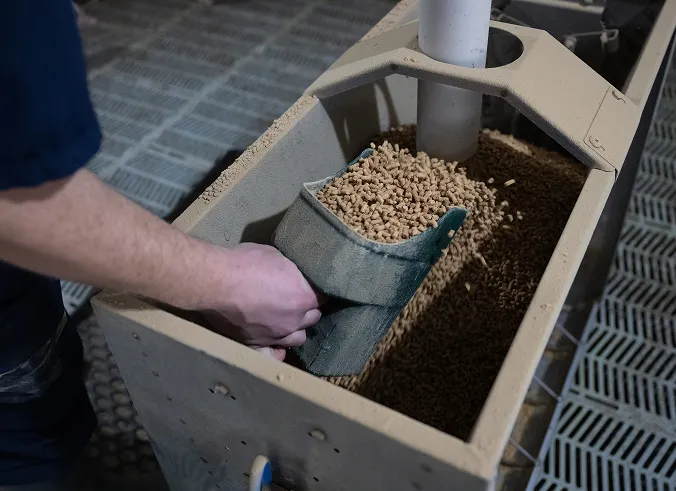
What began decades ago as a small aquaculture research effort has grown into one of the top markets for the U.S. soy complex. In marketing year 2024/25, Egypt imported more than 3.3 million metric tons (MMT) of U.S. soy valued at $1.4 billion.1 Checkoff-funded research, education, and relationship-building have helped develop the country’s fast-growing aquaculture industry — and with it, long-term demand for soybean meal used in fish feed.
The U.S. Soybean Export Council (USSEC), USB’s international marketing arm, has played a key role in that growth.
“They identified the need and saw the opportunities for U.S. Soy in Africa,” Petter says.
A major partner in that work is WorldFish, an international nonprofit research organization that has operated in Egypt since 1997. What began as a small, remote aquaculture research center has expanded into a hub for innovation focused on improving fish production and sustainability.
WorldFish researchers work on improving fish genetics, refining feed efficiency, studying disease challenges, and training producers in best management practices. The goal is to help Egypt become a model for aquaculture development across Africa.
“They have a high standard of what they want to promote and use,” Petter says. “They’ve put very strong land and water management practices in place, along with good science to back them up.”
The results have been dramatic. Between 2001 and 2021, aquaculture production in Egypt grew more than 700 percent.2 Today the industry uses between 800,000 and 1.1 MMT of soybean meal each year, with a significant share coming from the United States.3
In 2019, USSEC and WorldFish expanded their partnership by establishing the Soy Excellence Center (SEC) in Egypt. The center provides training and education programs designed to help aquaculture producers improve efficiency and profitability.
“It’s been a great fit,” Petter says.
What started as a small classroom has evolved into a training hub that educates fish farmers, feed mill operators, researchers, and fingerling producers. Between 2019 and 2024, the SEC conducted 78 aquaculture training programs reaching more than 17,700 participants.4
“These are all people who will go back to their farms and businesses and continue promoting the use of U.S. Soy,” Petter says.
Egyptian aquafeed manufacturers have also developed a strong preference for U.S. soybean meal.
“They understand the sustainability, the quality, and the consistency of our supply,” Petter explains. “That gives us a big advantage and creates room for continued growth.”
During the See for Yourself mission, farmers also saw how new aquaculture technologies are improving productivity and sustainability. One example is the In-Pond Raceway System (IPRS), which uses controlled water flow and management practices to improve fish growth and water quality.
Egypt’s aquaculture farms primarily raise freshwater or brackish-water species such as tilapia, carp and mullet.5 Petter says producers are making the most of available resources by recycling nutrients and water whenever possible.
At one site, farmers even used nutrient-rich sediment and recycled water from fish ponds to grow vegetables.
“We saw cabbages as big as basketballs,” Petter says.
Demand for fish in Egypt continues to grow. The country produces roughly 1.5 million tons of farmed fish annually, with aquaculture accounting for about 80 percent of total fish production.6
Petter says the trip also highlighted the relationships and collaboration needed to build strong export markets. During the visit, the farmer delegation met with representatives from USSEC, USB, WorldFish, the U.S. Department of Agriculture, the Foreign Agricultural Service, and Egyptian government officials.
“It’s important for farmers to know these relationships are happening every day,” Petter says. “USSEC has staff working in more than 80 offices around the world, and that speaks volumes about what our checkoff is doing.”
For U.S. soybean farmers, those efforts are essential. Only about four percent of the world’s population lives in the United States7, meaning international markets are critical to maintaining strong demand.
“We absolutely have to market our soybeans overseas,” Petter says. “We’re helping provide protein to people in this region, and that makes the relationship between Egypt and U.S. Soy a win-win.”
- https://unitedsoybean.org/hopper/u-s-soy-exports-continued-to-grow-in-marketing-year-2024-25/
- https://ussec.org/news/egyptian-customers-continue-to-benefit-from-u-s-soys-technical-support-sec-programs/
- https://marketviewdb.unitedsoybean.org/dashboards/?bi=US_Soy_ExportsbyDestination_Map
- https://apps.fas.usda.gov/newgainapi/api/Report/DownloadReportByFileName?fileName=Egyptian%20Aquaculture%20Industry%20-%202025%20Update_Cairo_Egypt_EG2025-0006.pdf
- https://apps.fas.usda.gov/newgainapi/api/Report/DownloadReportByFileName?fileName=Egyptian%20Aquaculture%20Industry%20-%202025%20Update_Cairo_Egypt_EG2025-0006.pdf
- https://apps.fas.usda.gov/newgainapi/api/Report/DownloadReportByFileName?fileName=Egyptian%20Aquaculture%20Industry%20-%202025%20Update_Cairo_Egypt_EG2025-0006.pdf
- https://worldpopulationreview.com/
U.S. Soy Staff Writer
U.S. Soy provides a sustainable alternate protein, that allows our farmers to grow their businesses and feeds countless families around the world.
.webp)