



05.14.2026
U.S. Soy Staff Writer
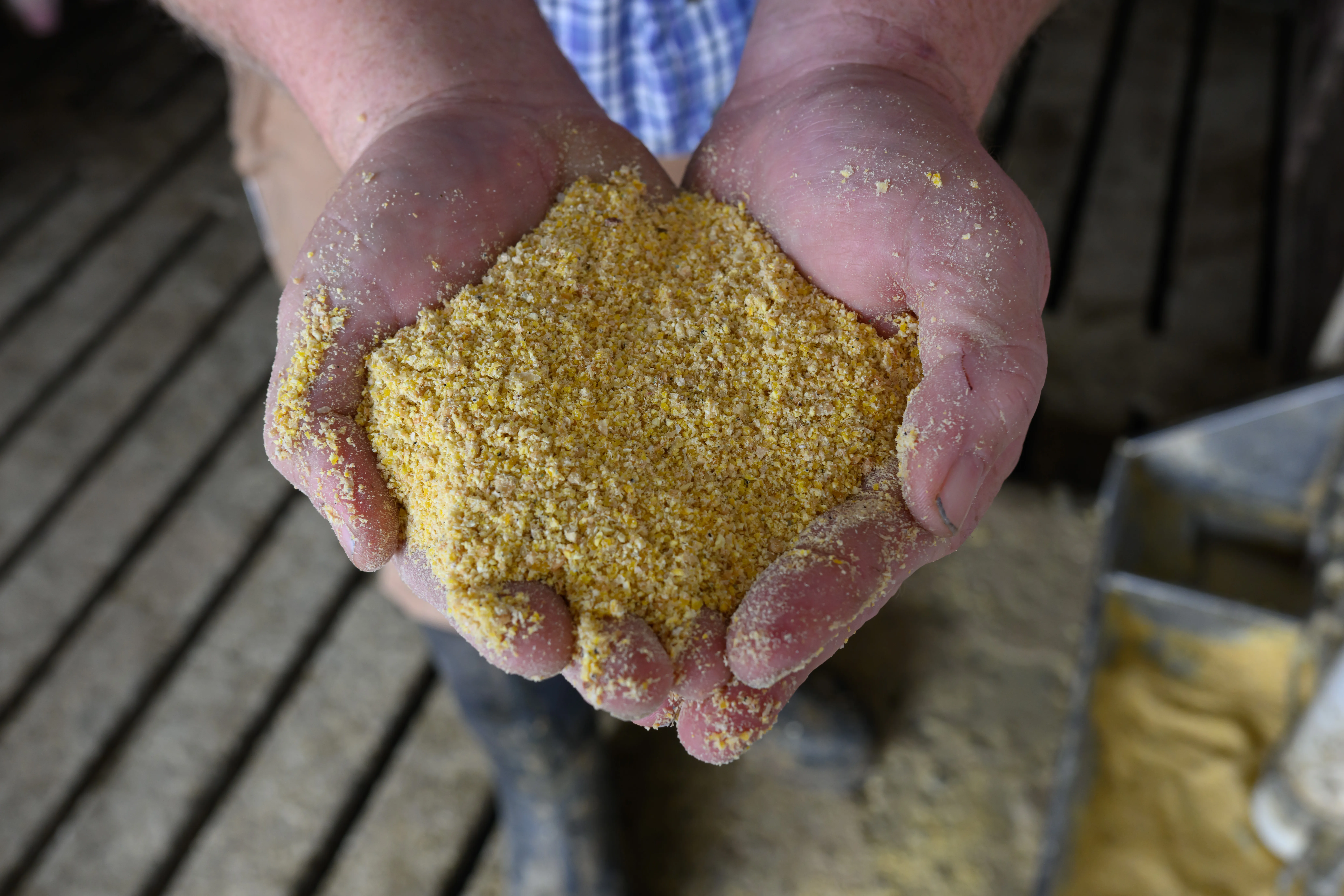
Soybean meal has long been a staple in swine diets – and for good reason. It’s widely known as a reliable, high-quality protein source that helps pigs grow. But recent research shows that soybean meal brings more to the table than many producers may realize. Beyond protein, it plays a meaningful role in energy, coupled with a greater value proposition for soybean growers.
Checkoff-funded research1 reveals that soybean meal contains up to 150 kilocalorie/kilogram more energy than National Research Council (NRC) reference values for poultry and swine, potentially worth a whopping $21-$106 more per ton to producers. These commercially verified energy values will help not only boost meal demand, but also farmer profitability.
“The United Soybean Board’s investment has paid off in increasing value for pig farmers,” says USB Vice President, Animal Nutrition & Health Nathan Augspurger. “Soybean meal has been proven to provide more usable energy than previously credited, helping to fuel growth in addition to supporting muscle development. For producers, that translates to better feed efficiency and improved performance potential when diets are properly balanced – meaning that soybean meal’s value is mature and validated in the swine space.”
“Over half of the pigs produced in the U.S. are now being fed diets based on SBM containing a much higher energy level, because, simply put, higher energy as a component of soybean meal increases its value in diets,” he continues. “Soybean meal has increased economic and nutritional competitiveness against other ingredients, along with added fats. Any added volume is relative to not having to use as much fat and is directly relative to energy value.”
In fact, this consistency of increased energy has been observed and proven across seasons, production systems, geography, different pig types, and different diets, which Augspurger notes adds veracity to the quality and value of U.S. soybean meal shown in this work. “This nutrient composition is not a flash in the pan. A much more competitive and cost effective package is truly the route to greater value.”
For producers, the takeaway is straightforward: soybean meal delivers value that goes beyond its price per ton. When included at the right levels, it supports growth, efficiency, and herd health — all key drivers of profitability.
USB Director Lawrence Sukalski, a Minnesota farmer, reports that pork farmers are increasing soybean meal in their hog diets as much as 20 percent. That increased meal ratio makes sense for farmer profitability coupled with pig performance, he says. “Since we need more soybean oil for renewable fuels, soybean meal is competitively priced, due to soybean crush expansion in several states. And, of course, as Nathan pointed out, higher inclusion rates of soybean meal help herd health and provide better performance.”
As margins tighten and every input is scrutinized, it’s important to look at the full picture. Soybean meal isn’t just filling a protein requirement. It’s helping pigs perform, even when conditions are less than ideal. And in today’s production environment, that added value can make a measurable difference.
To learn more about the value of U.S. Soy, please visit the U.S. Soy Center for Animal Nutrition and Health (U.S. Soy CAN). This new technical resource, funded by the Soy Checkoff, focuses on soy-related solutions for the swine, poultry, beef, and dairy industries delivering research, as well as resources that help put these solutions into commercial practice.
U.S. Soy Staff Writer
U.S. Soy provides a sustainable alternate protein, that allows our farmers to grow their businesses and feeds countless families around the world.